What is a camera robot, and why do you need one?
They’re two different questions, but the answer to the first has a huge impact on how people answer the second.

When I was approached by some ex-DJI colleagues about helping them with a “little robot,” I wasn’t quite sure what I was getting myself into—but I agreed. Working with great people is often more rewarding than working on a great project (although the two tend to go hand in hand).
So I met Beni. Except at the time, it wasn’t called Beni. We had to come up with that first.
That was the first major hurdle. The name had to be warm, friendly, memorable, and—perhaps most importantly—not create any major copyright or trademark headaches.
Once the name was out of the way (no small feat), the bigger questions started.
The founders initially imagined Beni as a kind of personal companion. At minimum, something with a little WALL-E or R2-D2 charm. At its most ambitious, perhaps even a mobile, embodied version of Siri or ChatGPT. But chip limitations meant the AI and speech capabilities of the first version would be limited, so the focus shifted to Beni’s other strengths—and how they might attract users.
For me, the obvious one was the camera.
I suggested essentially framing Beni as a “ground drone”—without actually using that term for legal and regulatory reasons. It films. It follows. It tracks. It avoids obstacles. It can shoot in 4K, race along at nearly 18 mph, and even get itself upright again when it falls over.
Sure, the angle is quite low, but you can still use it for many of the same things people use drones for, plus quite a few things you can’t. And perhaps the best part: none of the complicated rules and regulations that come with flying.
There was some pushback on going all-in on this direction, but eventually we found a more interesting middle ground.
Beni became a bit of something for everyone: a “ground drone” for athletes and content creators, an advanced toy for younger users and family time, and a roving camera for all the little moments in between. It offered an easy way to capture candid shots with everyone in the frame—because no one had to be stuck behind the camera.
That thinking eventually crystallized into a new category and a simple introduction:
Meet Beni, Your First All-Terrain Camera Robot.
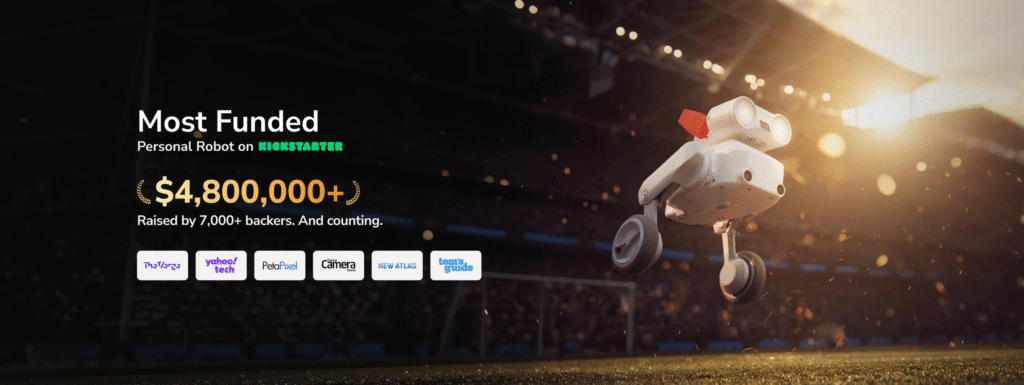
The result? The Kickstarter campaign raised nearly $5 million from almost 8,000 backers—roughly 100× its original $50,000 funding goal. It was named a Kickstarter “Project We Love” and picked up enthusiastic reviews from photographers, filmmakers, athletes, and tech creators.
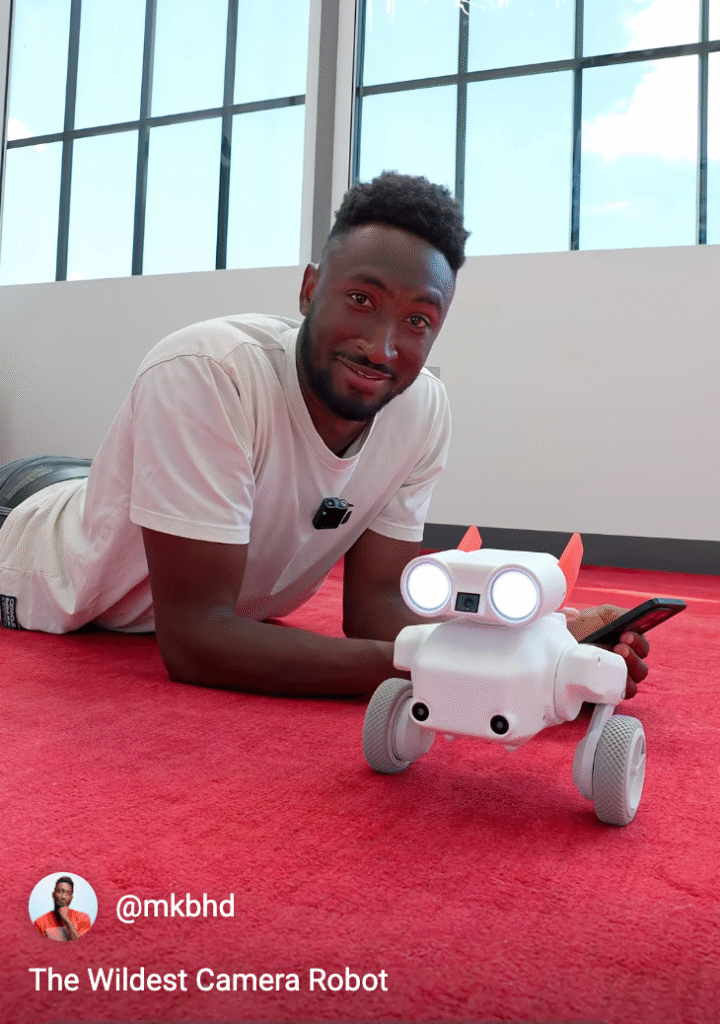
There was even a glowing 10/10 review from MKBHD—which was great, although mostly it was a relief that he didn’t trash it and destroy the company.
One of the biggest things I learned from this project was the importance of respecting the founders’ and engineers’ vision for what they want their creation to be.
As a creative, you can frame a product a hundred different ways. But the people who have spent years building it understand its soul in a way you don’t, and it’s important to listen to what they think it should become.
It’s always okay to push back when you disagree. But when you’re working with a great group of people, that back-and-forth usually leads somewhere better: to something unique that no one person could have come up with on their own.